








Deciding where the children live and when they see each parent

Child arrangements mediation is where separating parents work out the practical shape of their children's lives: where they live during the week and at weekends, how holidays and birthdays are divided, who does handovers and where, which school they attend, and how the two of you will communicate about them.
These are the questions a court would answer if you asked it to. They are also questions the two of you understand far better than any judge will after a few hours of evidence. That is the argument for mediation here, and it is a practical one rather than a philosophical one.
What the law actually says
There is no legal presumption that children live with their mother, and no automatic entitlement to equal time. The Children Act 1989 requires that the child's welfare is the paramount consideration, and the welfare checklist in section 1(3) sets out what that means: the child's wishes and feelings in light of their age and understanding, their physical and emotional needs, the likely effect of any change, and any harm they have suffered or are at risk of suffering.
The 2014 amendment added a presumption that the involvement of both parents furthers the child's welfare, unless the contrary is shown. Involvement does not mean any particular division of time. Parents sometimes arrive expecting the law to hand them a percentage, and it does not work that way.
What a workable plan actually contains
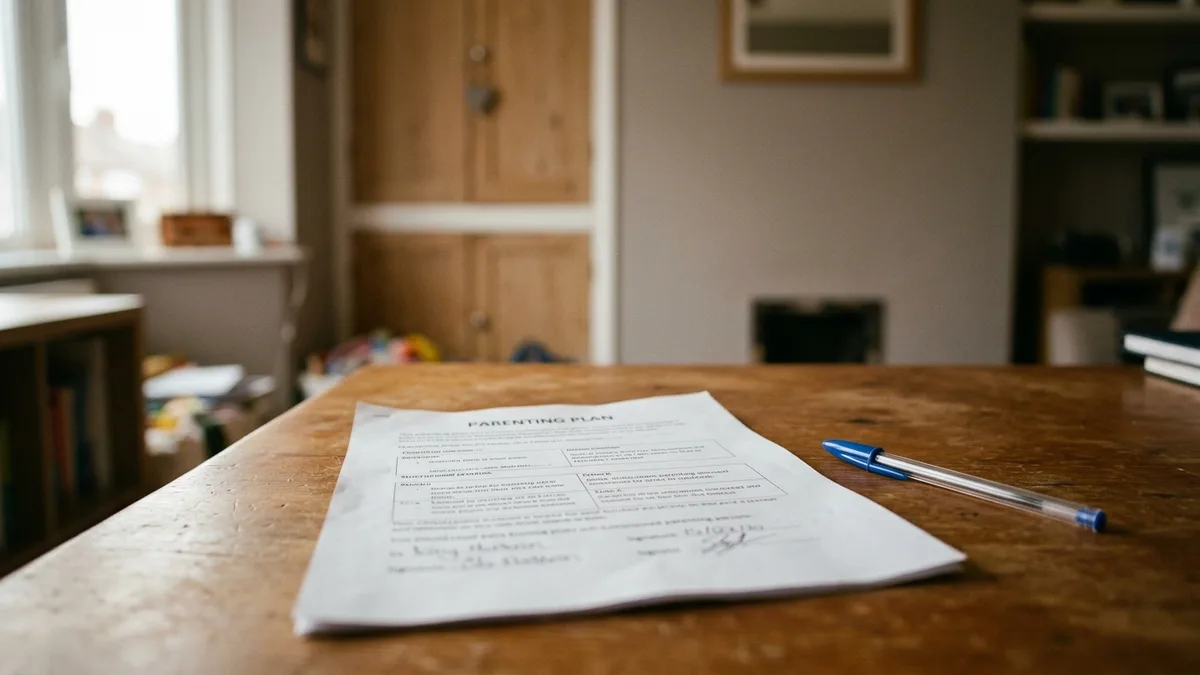
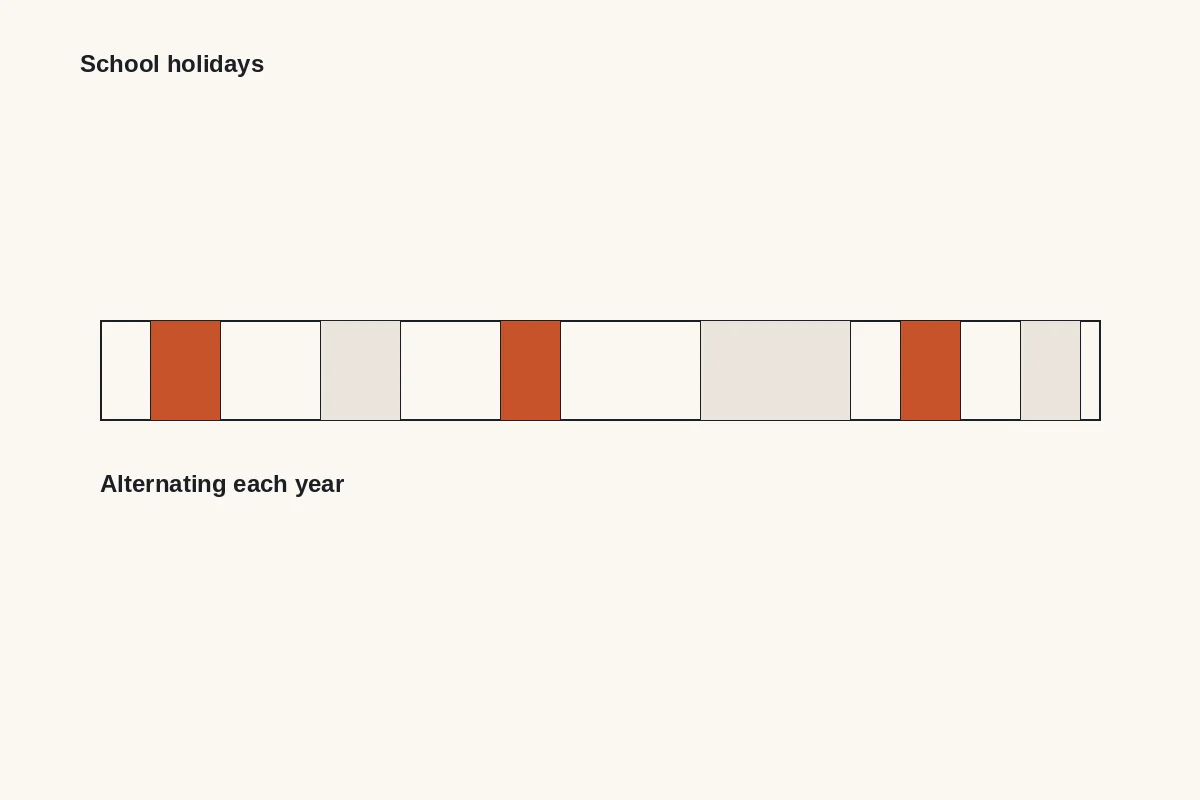
Term time and school holidays, set out separately, because a pattern that works in term time rarely survives six weeks of summer. Christmas and birthdays, named specifically. Handover times and locations, including who covers a delayed train or a late finish at work. How the children's belongings move between homes. How you will tell each other about illness, school events and medical appointments. How the arrangement gets reviewed as the children grow.
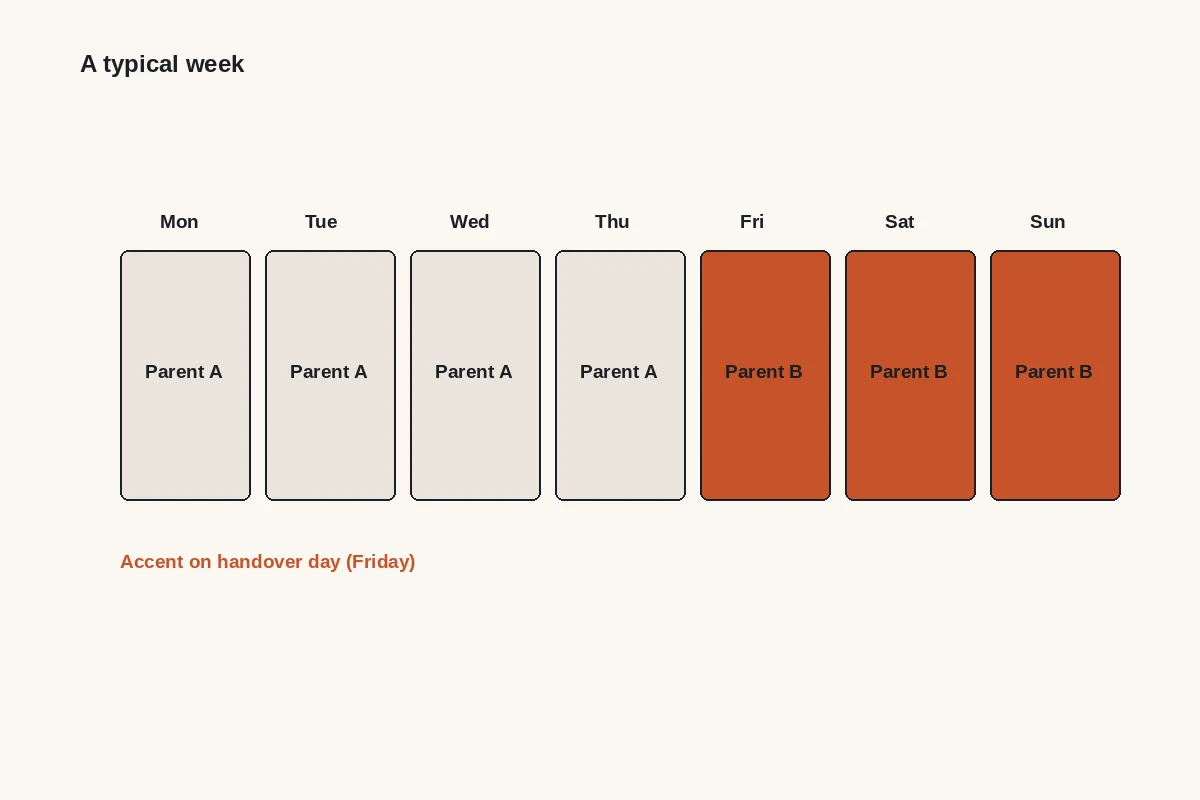
Vague agreements fail. A plan that says the children will spend time with each parent regularly is an argument waiting to happen. A plan that says alternate weekends from Friday 5pm to Sunday 6pm, with the pickup at the school gate, is one both of you can follow without needing to negotiate every week.
Children's voices
Child inclusive mediation offers children over ten a separate, confidential conversation with a specially trained mediator. Nothing they say is passed on without their permission and yours. It is not a request for the child to choose between parents, and a good mediator will not put a child in that position.
Where it is used well, it changes the conversation. Parents arguing about a schedule often discover that what the child minds about is something else entirely, such as never having their own space at one house, or missing a Saturday club.
How long it takes

Two to four sessions of around ninety minutes, usually spread over six to ten weeks. The gap between sessions is deliberate. It gives both of you time to try an arrangement before committing to it, which is worth more than settling everything in one long meeting and discovering in week three that it does not work.
Making it binding, or not
What you agree is written up as a memorandum of understanding. For child arrangements, converting that into a consent order is a choice rather than a requirement, and many parents never do. An order becomes worth having when one of you needs certainty, when a school or a passport office requires evidence of parental responsibility arrangements, or when a previous informal agreement was not kept.
When this is not the right route
Where there has been domestic abuse, or where there is a genuine risk of harm to a child, mediation is not appropriate and an exemption from the MIAM requirement applies. If that is your situation, tell us at the enquiry. We will explain the evidence a court expects for the exemption rather than book you a meeting you should not have to attend.
Common patterns, and why the popular ones often fail
Alternate weekends with one midweek evening remains the most common arrangement, and for many families it works. Week on, week off appeals to parents who want equal time, and it suits some children and unsettles others, particularly younger ones who lose the rhythm of a single base.
The two by two by three pattern, where the week is split into blocks, keeps both parents in the child's routine and demands a level of co-operation and geographic proximity that not every family has. The arrangement that fails most often is the one designed to be fair to the parents rather than workable for the child.
Distance changes everything
A plan that works across one town does not survive a ninety minute commute. Where one parent has moved for work, midweek contact usually has to be replaced with longer, less frequent blocks and reliable video contact. Pretending otherwise produces a schedule that collapses in its first month and takes trust with it.
Relocation
If one parent wants to move a significant distance within the UK, or abroad, that cannot be decided unilaterally where both hold parental responsibility. Moving a child abroad without the other parent's consent or a court order is child abduction, and it is a criminal offence.
Relocation is one of the hardest issues to mediate because the outcomes are not divisible. It can still be worth attempting, because the plan that makes a move workable, covering travel costs, holiday blocks and contact schedules, is one the two of you can design far better than a court can.
When a parent stops turning up
Missed contact is the most common reason parents return to mediation. Before treating it as a breach, it is worth establishing whether the schedule is genuinely workable for the parent missing it. A pattern agreed under pressure to reach agreement often fails for practical reasons rather than unwillingness.
Where it is unwillingness, mediation has limits. A court can make an order and attach an enforcement provision, though a court cannot make a parent want to see their child either.
Grandparents and other family
Grandparents have no automatic right to contact and need the court's permission before applying for an order. Mediation is frequently a better route, and it is a common reason a grandparent contacts us. Where a relationship with a grandparent mattered to a child, losing it is a real loss to that child rather than a matter between adults.
Reviewing the plan
A plan written for a five year old will not suit them at eleven. Building a review into the agreement, commonly annually or at each change of school, means revisiting it is a normal event rather than a confrontation. Families who do this return to mediation for an hour when something changes, instead of returning to court after two years of it not working.


 Face to face sessions
 Online and remote mediation
 Evening and weekend appointments